



Repair
★ 4.5(5k+ Bookings)
- Complete RO system inspection and diagnosis
- Repair of pump, SMPS, membrane and filters
₹399₹450Save 11%
Doorstep RO Repair, Installation & AMC in Ahmedabad

Livpure Service Center Ahmedabad always stands whenever you call for service. You must schedule a Livpure Service to experience it's satisfactory and low-cost service in Ahmedabad. Livpure RO Service Ahmedabad always care for your schedule with the vast service team.
Packages

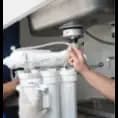
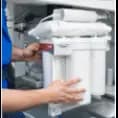

If your Livpure RO is giving trouble in Ahmedabad, you will usually notice it first from daily symptoms like slow water flow, bad taste or smell, frequent auto shut-off, unusual noise, or leakage near the purifier. Water Purifier Care India (WPCI) handles Livpure service at home and we start with diagnosis first, not random part swapping. Once we know which stage is failing, the repair becomes straightforward and faster.
Bad or salty taste (especially after a few days of service): usually RO membrane is exhausted or not rejecting TDS properly.
Bad smell (often after monsoon or when stored water sits in an overhead tank): usually pre-carbon or post-carbon filter is overdue, or internal cleaning is needed.
Slow filling / very low output: commonly a choked sediment pre-filter, low inlet water pressure, or a weak booster pump.
Auto shut-off every few minutes: commonly low pressure, inlet fluctuation, stuck float/pressure switch, or solenoid valve (SV) not sealing.
Water leakage from below the housing: usually loose/failed fittings, cracked RO drain line, or a worn O-ring at filter housings.
No water / only a trickle: usually membrane blockage, severe scaling, or inlet flow restriction plus a failing membrane or valve.
Confirm the symptom and when it started (after borewell pressure drop, after monsoon turbidity, after long storage).
Check inlet water pressure at your tap and test whether overhead tank level is stable (RO needs consistent feed).
Inspect filter stages in order: sediment pre-filter, pre-carbon and post-carbon (for clogging, discoloration, and flow restrictions).
Check RO output performance using a TDS reading (if available) and by verifying reject/flush behaviour; then examine RO membrane condition.
Listen and observe: pump noise, water hammer, valve operation, and check for leakage points around housings and drain line.
Clean and reassemble properly: change only the failing stages, sanitize internal flow paths, and test again before the final handover.
Ahmedabad water can be hard, and borewell or municipal supply can swing in turbidity during seasonal changes. That is why filter stages clog faster if the sediment load is high, and why scaling can shorten RO membrane life when water hardness/TDS is high. These timelines are typical, not guaranteed for every household usage pattern.
Stage / component | Typical interval (depending on water quality and usage) |
|---|---|
Sediment pre-filter | Every 3-6 months |
Pre-carbon and post-carbon filters | Every 6-12 months |
RO membrane | Usually 2-3 years (can be shorter in very hard/high-TDS water) |
UV lamp (if your model uses it) | Around 9-15 months of running time |
UF cartridge (if present, in some setups) | Usually 12 months, based on turbidity/flow |
Monsoon turbidity: sediment pre-filter clogs quickly, causing slow flow and frequent shut-off.
Overhead tank storage: smell and taste issues come back even after filter change if tank hygiene is ignored.
Low voltage / power fluctuations: pump and control electronics may behave intermittently, causing repeated cycling.
Hard water scaling: RO output becomes weak and taste turns salty even when filters look “okay”.
Blocked drain line: reject water flow gets restricted, and RO performance drops over time.
Cost usually depends on what failed (filters vs membrane vs pump/SMPS vs valves), whether the issue is only clogged stages or deeper scaling, and how much cleaning/sanitization is required. Time depends on access and diagnostics: a simple filter change after a blockage can be quick, while membrane-related work may require more testing and careful flushing. Repair is usually worth it when the RO membrane can still reject TDS and leak points are limited to housings/O-rings; if the membrane is fully exhausted and repeatedly re-fails tests after cleaning, replacement becomes the sensible option.
Check if the issue is only during a certain time: compare when overhead tank level is low versus full.
Look for visible leakage: around filter housings, RO drain line, and under the unit (do not keep running if water is pooling).
Check whether water flow is slow from the inlet tap itself: low feed pressure can mimic RO failures.
If you have a TDS meter, note feed TDS and purified TDS readings (even a rough comparison helps the technician).
Listen for pump/valve behaviour: continuous buzzing, clicking, or running without output points to control/valve or pressure issues.
Do not open RO pressure vessels or membrane housings without correct tools and procedure; incorrect sealing can cause hidden leaks.
Do not bypass auto shut-off/pressure controls; it can lead to dry running or flooding.
Do not repeatedly reset after shut-off without checking inlet pressure and drain flow.
Do not ignore persistent salty taste; membrane and scaling issues need proper diagnosis.
Do not run the RO continuously when it is leaking or not producing stable output.
If you tell Water Purifier Care India (WPCI) the exact symptom you are seeing and since when, we can plan the right Livpure RO repair parts and do the diagnosis in the same order technicians follow at the site. Next step: switch off the unit if there is leakage or no output, then book a Livpure service visit for Ahmedabad so the failing stage is identified and corrected properly.
Why Trust Us?
in Ahmedabad — Reliable, Fast & Professional
Technician visits your location for service
Guaranteed service visit in 48 hours for any request
Trained technicians for high quality service and repairs
Only high quality spare parts used for repairs
Watch
FAQ
Find answers to common questions about our services
If you have searched for a Livpure service center in Ahmedabad, you probably want three things: someone who knows Livpure purifiers, a visit without a long wait, and a fair, clear price. We provide independent doorstep service for Livpure owners across the city. We are not Livpure's own service center, and we explain that fully further down, but our technicians work on Livpure units every week.
Many people assume Ahmedabad drinks from the Sabarmati, because the river and its riverfront are so central to the city. In practice, the Ahmedabad Municipal Corporation draws almost all of its supply from canals. Narmada water reaches the Kotarpur treatment plant through large gravity pipelines and the Jaspur plant through the Dholka branch canal, while Mahi river water is pumped to the city from the Raska weir scheme. The old French wells along the Sabarmati, once important, are now little used according to AMC's own figures, and borewells supply only a small part of the total.
For a Livpure purifier, this means piped AMC water is generally gentle: moderate TDS, low sediment and chlorinated for safety. The tougher cases are societies still running partly on borewells, where groundwater may be saline, hard, or high in fluoride or nitrate, and homes using private tankers.
We service Livpure Bolt and Bolt Star, Envy, Zinger, Touch, Pep Pro and Pep Plus, Glo, Glo Star and Glo Pro, and Livpure Smart subscription models. Older Livpure RO, UV and UF units are welcome too.
| Stage | Job | Ahmedabad Wear Pattern |
|---|---|---|
| Sediment filter | Traps dust, sand, rust | Clogs faster in dusty pre-monsoon months |
| Carbon filter | Removes chlorine, odour | Steady wear on chlorinated AMC water |
| RO membrane | Reduces salts, hardness, fluoride | Long life on canal water, much shorter on borewell |
| UV / UF | Microbial barrier | UV lamp yearly; UF slows gradually |
| Mineraliser, copper, zinc | Adds minerals back | Consumable; replace as per usage |
For homes on AMC water, every six months works well, with mineral cartridges checked each time. For borewell or mixed-supply societies in areas such as Vastral, Ramol, Gota or Shela, every three to four months is better. Schedule one visit in March before the heat peaks, because purifiers run longest in April and May.
A few habits make a real difference in Ahmedabad conditions. Keep the purifier on a shaded inside wall rather than near a window that takes the afternoon sun. Plug it into a spike guard, as voltage tends to dip on the hottest days. Cover the rooftop tank and get it cleaned at least twice a year, once before summer and once after the monsoon. And if you notice that purified water has started tasting different, note whether your building changed its water source recently; that one detail often explains the problem before our technician even opens the unit.
Ahmedabad has a large population of students and young professionals living in rented flats and paying-guest homes around Navrangpura, Vastrapur, Memnagar and the university areas. Livpure's subscription and rental units are popular here. Shared kitchens mean heavier daily use and, often, nobody keeping track of filter dates. If you manage a PG or a shared flat, a fixed service schedule is worth setting up, and we can remind you when visits are due. If you are moving out, we can uninstall the unit carefully so the next set-up goes smoothly.
Navrangpura, Vastrapur, Memnagar, Gurukul, Bodakdev, Thaltej, Science City, Sola, Gota, Chandlodia, Ghatlodia, Naranpura, Sabarmati, Chandkheda, Ellisbridge, Paldi, Vasna, Shela, Ramol, Vastral, Nikol and Odhav.
Although this page is named for Livpure service, Water Purifier Care India is an independent multi-brand provider. We are not Livpure Pvt. Ltd., not its service center, and not affiliated with it in any way. The Livpure name is used only to describe the purifiers we service. If your purifier is under warranty or a subscription agreement, please check with Livpure before booking an outside service.
Call 8506096743 or book online through this page for Livpure purifier service in Ahmedabad.