



Repair
★ 4.5(5k+ Bookings)
- Complete RO system inspection and diagnosis
- Repair of pump, SMPS, membrane and filters
₹399₹450Save 11%
Doorstep RO Repair, Installation & AMC in Ghaziabad
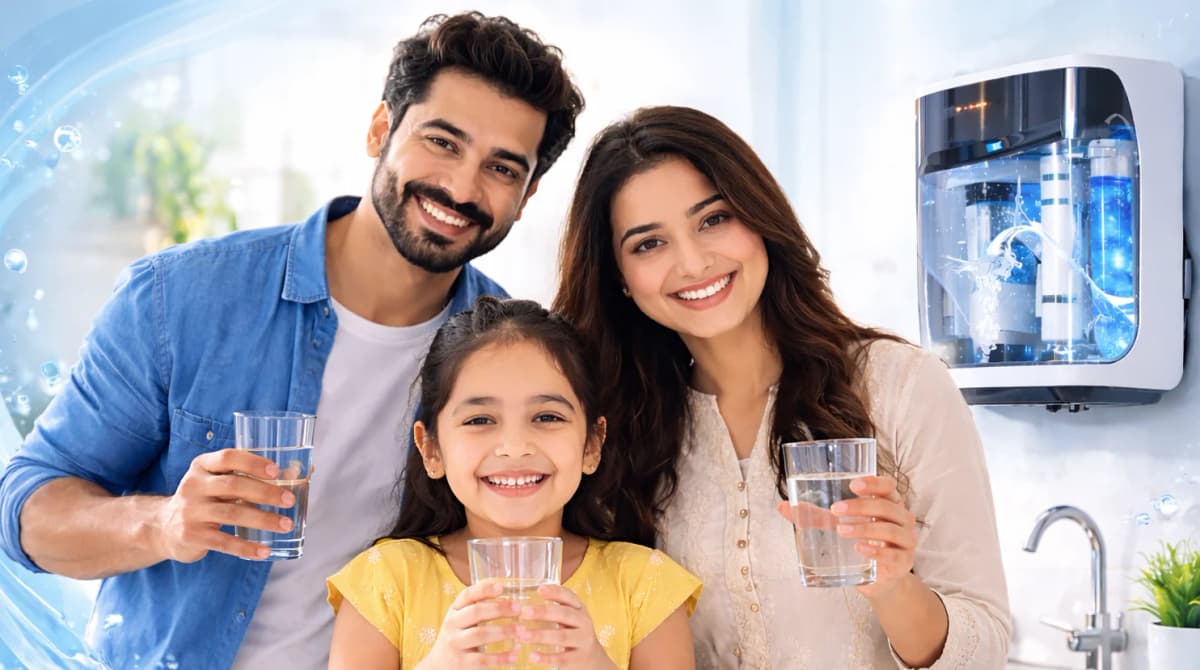
Livpure Service Center Ghaziabad always stands whenever you call for service. You must schedule a Livpure Service to experience it's satisfactory and low-cost service in Ghaziabad. Livpure RO Service Ghaziabad always care for your schedule with the vast service team.
Packages

If your Livpure RO in Ghaziabad is giving bad taste, low water flow, repeated auto shut-off, leakage, or it is not filling the storage tank properly, you need a real diagnosis, not random filter changes. In most cases the problem is one stage of the RO system choking, leaking, or losing rejection. A service engineer from Water Purifier Care India (WPCI) will check the symptoms first and then open only the parts that need work.
Bad taste (salty/metallic): often the RO membrane is exhausted or the reject water line is blocked, so dissolved salts are not being rejected.
Smell in water: usually pre-carbon/post-carbon filters are spent, or there is microbial growth in the housing/lines when servicing is delayed.
Slow flow from tap or weak filling: commonly a choked sediment pre-filter, low inlet pressure from borewell/municipal supply, or a failing booster pump/solenoid valve (SV).
Storage tank not filling / frequent dry running: often a float valve issue, low pressure, inlet valve problem, or a stuck SV.
Water leakage (under unit or around fittings): could be O-ring/housing crack, loose fittings, leaking drain line connection, or a split membrane housing.
Machine runs continuously / auto shut-off not working: usually float/pressure switch sensing issue, SV not closing, or a control problem that needs testing with the correct readings.
Check inlet water condition: turbidity from monsoon, expected hardness/TDS behaviour in Ghaziabad, and whether the supply pressure is stable.
Inspect leaks and connections first: look around the RO housing, drain line joints, storage tank outlet, and tubing before touching filters.
Measure performance with TDS/flow checks: verify feed vs RO output rejection trend to confirm whether the membrane is still doing its job.
Test functional parts: booster pump operation, solenoid valve (SV) response, and float valve/tank sensing.
Open and inspect consumables: sediment pre-filter, carbon filters, and then the RO membrane condition (signs of scaling/fouling).
Flush and clean the system: backflush/line cleaning where needed, sanitize the relevant parts, and reassemble with correct seals.
In hard-water pockets and high-TDS areas like parts of Ghaziabad, filters get loaded faster, especially when there is monsoon turbidity. Service timing is still based on your usage and input water quality, but these are common intervals technicians follow as a baseline.
RO stage / part | Typical interval | What you notice when it is due |
|---|---|---|
Sediment (pre-filter) | 3-6 months | Slow flow, more dirt in housing, pressure drop |
Pre-carbon filter | 6-12 months | Bad smell, taste changes, uneven production |
Post-carbon filter | 6-12 months | Lingering taste/odour even when RO output looks clear |
RO membrane | 2-3 years (often earlier in high TDS) | Salty taste, higher TDS on RO output, frequent low performance |
UV lamp (if your model has it) | About 1 year of running time | No clear UV indicator can mean reduced protection; technician checks power/working |
You can do this: check if the inlet tap is fully open, confirm power supply stability, and observe whether the unit is filling the tank or not (no need to open the housing).
You can do this: check for obvious wetness under the unit and re-seat the external drain line connection only if it is loose (do not cut tubing).
Do not do this: do not open the RO membrane housing unless you have the right seals and procedure, because wrong assembly causes leaks and low rejection.
Do not do this: do not bypass filters or keep running when water taste becomes consistently salty.
Do not do this: do not keep the unit running to “try again” if it is not filling; it can worsen pump/SV wear.
If there is leakage, low rejection (salty RO), or continuous running, call WPCI for diagnosis so the correct part is repaired, not just replaced.
The cost depends mainly on what the technician finds: whether it is a simple filter change, a clogged housing, a solenoid valve/SV or float valve fault, a booster pump issue, or RO membrane replacement. It also depends on the model you have and how much cleaning is required to remove scaling/fouling. If your RO output TDS is high and the membrane is exhausted, repair usually means membrane replacement plus proper flushing. If the issue is leakage or a valve/control problem, repair is often quick and avoids wasting on consumables that are still fine.
Most RO services are completed in a single visit after diagnosis. A filter-only change or basic cleaning is usually faster. Membrane work, leak tracing, pump/SV/float replacement, or correcting storage tank filling may take longer because the technician tests operation after reassembly to confirm stable flow and proper shut-off.
Next step: tell the technician the exact symptom you are seeing (taste, flow, tank filling, leakage, or continuous running) and how long it has been happening. If you want a practical fix, arrange a doorstep service visit from Water Purifier Care India (WPCI) so your Livpure RO in Ghaziabad is diagnosed stage-by-stage instead of guessing.
Why Trust Us?
in Ghaziabad — Reliable, Fast & Professional
Technician visits your location for service
Guaranteed service visit in 48 hours for any request
Trained technicians for high quality service and repairs
Only high quality spare parts used for repairs
Watch
FAQ
Find answers to common questions about our services
People looking for a Livpure service center in Ghaziabad often live in the city's newer townships: Raj Nagar Extension, Crossings Republik, the NH-24 belt and the large developments off the Delhi–Meerut Expressway. These areas grew quickly, and in many of them municipal pipelines arrived late or not at all. Societies built their own borewells and treatment setups, and that is still how much of their drinking water arrives. We are an independent service team, not the brand's own centre, and we look after Livpure purifiers in these homes and across the rest of Ghaziabad.
In a township supplied by its own borewells, water quality depends on decisions most residents never see: how deep the borings are, whether there is a central softening or RO plant, and how often it is maintained. When a central plant is skipped for maintenance, or the society adds a new boring during a summer shortage, the TDS at your tap can change without warning. Groundwater in the Ghaziabad area is officially classed as over-exploited, and saltier water from deeper levels is common. A Livpure set up for one water profile can quietly struggle when that profile changes.
Our advice: ask your maintenance office for recent water test results, and keep a basic TDS meter at home. If the reading jumps, get the purifier checked.
Glo, Glo Star, Glo Pro, Bolt, Bolt Star, Pep Pro, Pep Plus, Envy, Zinger and Touch, plus Livpure Smart subscription purifiers. For subscription units, check whether servicing is included in your plan before booking outside help.
| Fault | Typical Cause |
|---|---|
| Output TDS higher than before | Membrane scaled by high-TDS borewell water |
| Pre-filter turns brown quickly | Rust or silt from society pipelines |
| Purifier stops mid-cycle | Low inlet pressure or faulty float |
| Bitter or flat taste | Exhausted carbon or mineral cartridge |
| Unit dead after a power cut | Adaptor damaged on switchover to DG backup |
| Water dripping under the unit | Loose fitting or cracked housing |
Most Ghaziabad societies run diesel generator backup during outages. The moment of switching from grid to DG, and back again, can send a brief surge through home circuits. Purifier adaptors are among the first casualties. A spike guard on the purifier socket is cheap insurance. If your Livpure has died just after a power cut, the adaptor is the first thing we check before suspecting the more expensive control board.
Summers here are long and hot, and families drink much more water from April to June, so purifiers run harder and filters fill faster. A pre-summer service in March is wise. Winters are cold and foggy, and some families drink less purified water then, leaving water sitting in the storage tank for longer. If the purifier has been barely used for a week or more, drain the tank and let it refill fresh before drinking.
A lot of Livpure owners in Raj Nagar Extension and Crossings Republik are tenants who brought the purifier from a previous city. When a unit moves, its filters may have been sitting dry for weeks, connectors can loosen in transit, and the settings were chosen for water elsewhere. If you have just shifted in, a reinstallation visit with a fresh sediment filter and a TDS test is a sensible first step.
For homes on borewell or township-supplied water, every three to four months is sensible. For homes on treated Ganga water, every six months is usually enough. Record the purified water TDS each time; if it keeps creeping up, plan a membrane check sooner.
Raj Nagar Extension, Crossings Republik, Siddharth Vihar, Nandgram, Govindpuram, Raj Nagar, Kavi Nagar, Shastri Nagar, Indirapuram, Vaishali, Vasundhara, Kaushambi, Shipra Suncity, Mohan Nagar, Sahibabad, Rajendra Nagar, Vijay Nagar, Pratap Vihar, Avantika and Dasna.
Although this page is titled for Livpure service center searches, we are not the Livpure service center. Water Purifier Care India is an independent multi-brand service provider, not Livpure Pvt Ltd or its authorised partner, and the Livpure name is used only to describe the purifiers we service. If your purifier is still under manufacturer warranty or an active subscription, consider contacting Livpure first.
Call 8506096743 or book online through this page to get your Livpure purifier serviced in Ghaziabad.