


Repair
★ 4.5(5k+ Bookings)
- Complete RO system inspection and diagnosis
- Repair of pump, SMPS, membrane and filters
₹399₹450Save 11%
Doorstep RO Repair, Installation & AMC in Aligarh

RO Service Center always stands whenever you call us for service in Aligarh. You must schedule a RO service to experience our satisfactory and low-cost service in Aligarh. RO service Centre always care for your schedule with the vast service team.
Packages

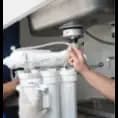
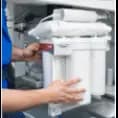

If your RO water purifier in Aligarh is giving trouble right now, you are not alone. Most calls to Water Purifier Care India (WPCI) start with the same everyday symptoms: salty or bad-tasting water, weak flow, strange noise, leakage, or the unit not filling at all. The technician’s first job is to match your symptom to the correct part, then check only what matters so the fix is not guesswork.
Salty or metallic taste (especially after the water was fine earlier): usually the RO membrane is exhausted, or there is a bypass/low rejection due to low inlet pressure.
Water smells bad or tastes like chlorine/odour: often a carbon stage issue (pre-carbon or post-carbon filter needs change) or poor tank/storage hygiene.
Slow water flow or long filling time: commonly choked sediment pre-filter (common during monsoon turbidity), low inlet pressure, or a failing booster pump.
No water / RO not starting: could be power fluctuation, SMPS issue, solenoid valve (SV) not opening, float valve stuck, or a problem with the overhead tank level.
Leakage from the bottom or around fittings: check for loose housing/connection, cracked tubing, or leakage from the RO membrane housing/end caps; if leakage is inside, it may be a pressure-related seal failure.
Bubbling, loud vibration, or continuous running: often due to air in lines, drain/saddle blockage, booster pump trouble, or controller/pressure switch behaviour.
Confirm the symptom and timing: when it started, whether it is sudden or gradual, and if you are on borewell water or municipal supply.
Check the inlet conditions: inlet pressure, presence of sediment, and whether the overhead storage tank has enough water (float valve operation). In Aligarh, high turbidity during monsoon often clogs the sediment pre-filter quickly.
Inspect the filter stages in sequence: sediment pre-filter, pre-carbon and post-carbon filters, then check the RO membrane housing for signs of scaling or leakage.
Test RO performance: TDS before and after (using a TDS meter), check rejection consistency, and run a controlled flush to see if the issue is membrane vs carbon vs bypass.
Check the system parts that affect flow and control: booster pump (if installed), solenoid valve (SV), drain line flow, pressure switch/controller behaviour, and UV lamp/UF cartridge status (only if your model uses them).
Aligarh water is often hard and can be high in dissolved solids. Hard water speeds up scaling on the RO membrane, which reduces rejection and leads to salty taste over time. If you store water in an overhead tank and the tank is not cleaned regularly, carbon filters can get overwhelmed faster and odours can come through. During monsoon, turbidity increases, so the sediment pre-filter loads quickly and causes slow flow until it is changed. Also, voltage fluctuation can stress the SMPS and controller, which shows up as intermittent starts, repeated cycles, or the unit running continuously.
Filter changes: sediment pre-filter and carbon filters are typically replaced during service when they are choked or exhausted.
RO membrane attention: technicians check membrane rejection and signs of scaling; replacement is done when the membrane performance no longer meets requirement.
Leak inspection and seal checks: housing, tubing, and drain connections are checked; if a cracked part needs replacement, it is treated as a repair job.
Electrical checks: SMPS/controller behaviour, pump operation, and solenoid valve function are checked; burnt electronic parts usually require replacement.
UV/UF stage: if your unit has UV lamp or UF cartridge, the technician verifies whether that stage is functioning (lamp time and output behaviour for UV).
What is not done as part of routine service: major plumbing rewiring, structural changes to tank/lines, or new RO installation work unless you book installation/un-installation separately.
Intervals vary by input TDS, water pressure, usage hours, and how fast your pre-filters get clogged. In hard-water and high-TDS areas like Aligarh, replacement is often earlier than people expect if the sediment stage is ignored for too long.
Stage | Typical interval (rough guide) |
|---|---|
Sediment pre-filter | 3 to 6 months |
Pre-carbon filter | 6 to 12 months |
Post-carbon filter | 6 to 12 months |
RO membrane | 2 to 3 years (can be earlier with high scaling or poor maintenance) |
UV lamp (if present) | about 1 year of running time |
Cost factors: which stage is failing (carbon vs membrane vs pump/solenoid), whether there is leakage repair, how many parts need replacement, and whether the inlet pressure/booster pump is also involved.
How long the work takes: small fixes like filter change and line tightening are quick, while membrane replacement, booster pump/SMPS issues, and leak tracing take longer because testing must confirm the fix.
When repair is usually worth it: if the system passes basic electrical and flow checks and only one stage (like a carbon filter or membrane) is failing.
When replacement is considered: if multiple major parts are repeatedly failing together (for example, membrane plus pump plus controller) or if the unit has been running with very high scaling for a long time.
Why technicians run tests after changes: a membrane replacement without correct inlet conditions (low pressure, clogged sediment stage) can lead to repeat failure.
If you tell the technician what you noticed first (taste, smell, flow, leak, or no water) and since when, the diagnosis becomes faster. Next step is to book an RO service visit for your Aligarh home and keep the unit running only if it is not leaking; if there is active leakage, switch off the supply and call for service immediately. WPCI technicians will check stages in order, test TDS and flow, and then recommend the exact part-level fix rather than random changes.
Why Trust Us?
in Aligarh — Reliable, Fast & Professional
Technician visits your location for service
Guaranteed service visit in 48 hours for any request
Trained technicians for high quality service and repairs
Only high quality spare parts used for repairs
Watch
Live activity
Trusted by customers across India
FAQ
Find answers to common questions about our services
Aligarh is one of those cities where almost every glass of tap water starts underground. The Nagar Nigam's water works department pumps groundwater from a network of municipal tubewells into the city's pipelines, and many households add a private submersible or still use a hand pump in the courtyard. There is no large river or dam scheme feeding the city's taps, so the quality of what you drink depends on the aquifer below your colony and on the pipes it travels through.
That makes a purifier close to essential here, and it makes regular RO service in Aligarh more than a routine chore. This page explains what the local water does to a purifier, which type of system suits it, and what our technicians check when they visit.
Studies of groundwater across the city have found that it is hard almost everywhere. Calcium and magnesium levels routinely cross the 200 mg/l acceptable limit for hardness, and total dissolved solids vary a lot, from fairly low readings in some wells to close to 1,000 mg/l in others. Fluoride and nitrate in the city wells sampled were generally within safe limits, which is good news, but your own borewell may differ from the average, so testing still matters.
The bigger worry researchers have flagged is bacterial. Supply lines in older parts of the city often run beside or under open drains. When pressure drops between supply hours, a leaking joint can pull in dirty water, and tests have found faecal coliform in a large share of piped and hand pump samples. In plain terms: Aligarh water can look clear and still carry germs.
Because hardness and dissolved solids are high in many wells, a UV-only or UF-only purifier is rarely enough. Those technologies kill or block microbes but leave salts untouched, so the water keeps its heavy taste and leaves white rings on utensils. A reverse osmosis unit cuts down dissolved salts, and pairing it with a UV or UF stage deals with the bacterial risk from leaking pipelines. For most Aligarh homes, RO plus UV (with or without UF) is the sensible combination.
The TDS controller, sometimes called a mineral or taste adjuster, deserves careful setting. If your input reading is moderate, a little blending keeps the water from tasting flat. If you are on a high-TDS private borewell, it should be turned down so untreated water is not mixed back in. We set it after measuring both input and output, not by guesswork.
| Symptom | What Usually Causes It in Aligarh |
|---|---|
| Water tastes heavy or salty again | Membrane scaled by hard water, or TDS knob opened too far |
| Flow drops to a thin trickle | Sediment filter clogged with pipeline silt |
| Purifier keeps running and never stops | Faulty float valve or low-pressure switch |
| Bad odour from purified water | Stale tank, exhausted carbon filter |
| Machine dead after a voltage spike | Burnt adaptor or pump motor |
| White crust around tap and tank outlet | Hardness deposits, membrane passing salts |
Given the bacterial findings, the storage tank inside your purifier is worth real attention. Purified water that sits for hours at Aligarh's summer temperatures can develop a film if the tank is never cleaned. During every service we drain the tank, scrub it, rinse it with a safe disinfectant and refill it. If your home also has a rooftop overhead tank feeding the kitchen, get that cleaned at least twice a year, because a dirty rooftop tank shortens filter life inside the purifier too.
For a home drawing from the municipal line with moderate TDS, a full service every five to six months works well. If you rely on a private borewell or the reading at your tap is high, plan on every three to four months, since the sediment filter and membrane take much more load. Book an extra check just before the May–June heat, when the purifier runs the most, and after the monsoon, when muddy water can enter leaking lines.
We also install new purifiers of any brand, uninstall and refit them when you shift house, and relocate units during kitchen renovation. For families who prefer not to track filter dates, an annual maintenance contract covers scheduled visits and reminders. Offices, coaching centres, clinics and shops can have their larger units looked after on the same plan.
Civil Lines, Ramghat Road, Marris Road, Sasni Gate, Quarsi, Dodhpur, Medical Road, Jamalpur, Sir Syed Nagar, Avas Vikas Colony, Swarn Jayanti Nagar, Surendra Nagar, Vishnupuri, Achal Talab, Centre Point, Railway Road, Mahendra Nagar, Khair Road, Agra Road and nearby colonies.
Water Purifier Care India is an independent multi-brand service provider and is not linked to any purifier manufacturer.
Call 8506096743 or book through this page to schedule your RO service in Aligarh.