



Repair
★ 4.5(5k+ Bookings)
- Complete RO system inspection and diagnosis
- Repair of pump, SMPS, membrane and filters
₹399₹450Save 11%
Doorstep RO Repair, Installation & AMC in Dhanbad

RO Service Center always stands whenever you call us for service in Dhanbad. You must schedule a RO service to experience our satisfactory and low-cost service in Dhanbad. RO service Centre always care for your schedule with the vast service team.
Packages

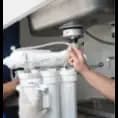


If your RO water purifier in Dhanbad is acting up right now, the quickest way to fix it is to match the symptom to the likely fault. Water Purifier Service Dhanbad (RO service, repair, installation and AMC) focuses on diagnosis first, because a “same problem” can come from different parts. When you call Water Purifier Care India (WPCI), the technician starts with what you are seeing and then checks the exact stage that is failing.
Bad taste or salty water: most often the RO membrane is exhausted or not rejecting TDS properly; sometimes the post-carbon filter is finished too.
No water / RO not starting: commonly low inlet pressure, a tripped power supply, or failure in the solenoid valve (SV) / float/level switch wiring.
Slow water flow or weak output: usually a choked sediment pre-filter or carbon pre-filter, or scaling inside the RO membrane housing due to hard borewell water.
Water leakage from the housing or under the unit: check for loose housings, failed O-rings, cracked drain line, or a membrane housing seal issue.
Noise during operation (humming, hammering) or frequent auto shut-off: can be pump issues, air in the line, low pressure, or solenoid valve not switching correctly.
Bad smell (sometimes chlorine-like) or black/brown particles: usually pre-filters/carbon filter are overdue, or overhead tank water is dirty and creating heavy sediment load.
Confirm symptoms and history: when the issue started, any recent change in water source (municipal to borewell or tank cleaning), and whether the unit was running on high TDS water.
Check inlet conditions: inlet pressure, flow rate to the purifier, and whether overhead tank supply is steady (monsoon often brings more turbidity).
Inspect the pre-filtration: sediment pre-filter and pre-carbon filter condition and whether they are clogged or passed particles.
Test RO rejection path: RO membrane performance via TDS checks (when available) and inspection for scaling/pressure behaviour; also check membrane housing seals.
Check controls and hydraulics: solenoid valve (SV) operation, float valve/level switch, drain flow, and any abnormal pump/SMPS behaviour.
Final checks after work: flush the system, verify output taste/clarity, and ensure no leakage at housings and drain connections.
Dhanbad water often carries higher hardness and varying sediment load, especially during monsoon and when stored in overhead tanks. Because of that, RO performance drops first in the pre-filters and then the membrane. WPCI technicians generally follow practical intervals based on usage and input water condition, not only on a fixed calendar.
Stage (RO purifier part) | Typical interval in hard/turbid water like Dhanbad |
|---|---|
Sediment pre-filter | 3 to 6 months |
Pre-carbon filter | 6 to 12 months |
RO membrane (common range) | 2 to 3 years |
Post-carbon filter | 6 to 12 months (varies with taste) |
UV lamp (if your model has UV) | about 1 year of running time (subject to model rules) |
Check whether water supply to the purifier is running and steady (if the overhead tank is empty or intermittent, RO may not start).
Look for obvious leaks: around the filter housings, membrane housing, and drain pipe line; note where the wetness starts.
Observe output pattern: does it start then stop, or does it not start at all? This helps identify SV/float/pump issues.
If you have a TDS meter, compare RO output TDS to feed (even a rough reading helps the technician judge membrane health).
Check if the purifier makes unusual sound right after switching on; note the timing (immediately vs after a few minutes).
If your unit has a UV stage, do not open electrical parts; only confirm whether the indicator is on when it should be.
RO service cost depends mainly on which stage is failing (filters vs membrane vs pump/SMPS vs UV/UF cartridge), how many parts need replacement, and whether the issue is only performance or also includes leakage/control faults. Service time depends on access to parts and whether the technician needs to flush, sanitize, and re-pressurize the system after work. The unit is usually worth repairing when the problem is limited to pre-filters, carbon filters, a UV lamp, SV/float control, or a leaking housing seal. If the membrane is exhausted and the purifier has been fed very high TDS for long, replacement may be more practical than repeated partial fixes.
Active leakage near electrical components: stop use immediately and call a technician.
If the purifier is sparking, tripping MCB, or smelling burnt: do not open the cabinet.
If RO output is salty even after changing filters: likely membrane or pressure/sensor issue.
If the pump runs but there is no proper RO flow: could be air lock, blocked line, or SV not switching.
If you suspect scaling inside the membrane housing: it needs correct flushing and safe handling, not random washing.
For your Dhanbad RO purifier, the sensible next step is to note the exact symptom (taste, flow, noise, leakage, or no power) and book a diagnosis visit. WPCI technicians will map that symptom to the specific RO stage, fix the root cause, and then test the output so the problem does not come back in a few days.
Why Trust Us?
in Dhanbad — Reliable, Fast & Professional
Technician visits your location for service
Guaranteed service visit in 48 hours for any request
Trained technicians for high quality service and repairs
Only high quality spare parts used for repairs
Watch
Live activity
Trusted by customers across India
FAQ
Find answers to common questions about our services
Water in Dhanbad depends on which side of the coalfield you live on. The main city, including areas such as Bank More, Dhansar, Hirapur and Saraidhela, has long relied on piped water drawn from Maithon dam, and local news has reported entire neighbourhoods going dry when pumps or transformers at the Maithon end failed. Jharia and Katras receive water from the Damodar river through the Jharkhand Mineral Area Development Authority (JMADA), while the municipal corporation runs a treatment plant at Jamadoba and the state has built further schemes covering areas such as Sindri. Pipelines in parts of the coal belt are decades old, and leaks are frequent. Plenty of homes therefore lean on handpumps, borewells and stored water as well.
That patchwork means no single purifier setting suits all of Dhanbad, and it is why our RO service here starts with a question about your source.
A study of water samples from across Dhanbad district, reported in early 2025, found fluoride ranging from very low to more than 12 mg/L, far above the 1.5 mg/L limit, with the highest levels in southern and south-eastern parts around Baliapur. The same research flagged phenol traces in several blocks, which the researchers linked to coal carbonisation and coking activity, and recorded TDS up to around 1,600 mg/L. More than half of the samples were judged unsuitable for drinking without treatment. Residents in some villages have also described stored water forming a reddish layer, a common sign of iron.
None of this is visible in a clear glass. It is the main reason RO purifiers are widely used here.
A purifier's first stage in Dhanbad works harder than in most cities. Fine coal dust settles into uncovered rooftop tanks, and older steel pipelines shed rust whenever supply restarts after a breakdown. Leaks also let muddy water seep back into lines when pressure drops. The result is a sediment filter that turns grey or brown in weeks and a carbon stage that loads up early. Keep your overhead tank tightly covered, flush the line for a few minutes after a long supply cut, and have the pre-filter checked whenever the purifier's flow slows. In homes close to busy coal transport roads or active mines, an inexpensive external spun filter fitted before the purifier can double the life of the internal cartridges.
| What You Notice | Typical Cause in Dhanbad |
|---|---|
| Black or grey pre-filter within weeks | Coal dust in open storage tanks |
| Brown deposits in purifier tank | Rust from old pipelines or iron in groundwater |
| Output TDS rising steadily | Membrane scaled or fouled; controller opened too far |
| Purifier dead after an outage | Adaptor damaged by voltage fluctuation |
| Pump runs but tank fills slowly | Low inlet pressure or blocked pre-filter |
| Odd chemical smell | Exhausted carbon stage; stale stored water |
Dhanbad summers are fiercely hot, and when demand peaks and supply schemes falter, households fall back on handpumps and tankers. The monsoon then brings turbid river water and mud into leaking lines. We suggest one service in March, before the heat, and another after the rains. Homes drinking groundwater should service every three to four months; families on steady piped supply can manage with six-monthly visits.
We install purifiers of every brand, fit pre-filters for dusty or rusty supply, and uninstall and refit when you move between colliery quarters, flats or new houses. Annual maintenance contracts suit homes, schools, clinics, coaching institutes and offices that prefer scheduled visits with written records.
Bank More, Hirapur, Saraidhela, Dhaiya, Bartand, Housing Colony, Dhansar, Jharia, Katras, Sindri, Govindpur, Bhuli, Barwadda, Steel Gate, Wasseypur, Purana Bazar, Manaitand, Kusum Vihar, Memco More, Hirak Road, Luby Circular Road and Matkuria.
Water Purifier Care India is an independent multi-brand service provider, not an authorised centre of any manufacturer.
Call 8506096743 or book through this page for RO service in Dhanbad.