



Repair
★ 4.5(5k+ Bookings)
- Complete RO system inspection and diagnosis
- Repair of pump, SMPS, membrane and filters
₹399₹450Save 11%
Doorstep RO Repair, Installation & AMC in Hubli Dharwad

RO Service Center always stands whenever you call us for service in Hubli Dharwad. You must schedule a RO service to experience our satisfactory and low-cost service in Hubli Dharwad. RO service Centre always care for your schedule with the vast service team.
Packages

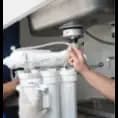
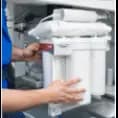

If your RO water purifier in Hubli or Dharwad is giving trouble right now, the symptoms usually point to a specific part of the system. Water Purifier Care India (WPCI) handles doorstep RO service for common issues like slow flow, bad taste or smell, high TDS, unusual noise, and leakage. A good service starts with diagnosis first, not by blindly changing parts.
Bad taste (often salty) or high TDS on the outlet: typically an exhausted RO membrane, wrong pressure, or a bypass/connection issue after the membrane.
Bad smell (stale/chemical) even after running the tap: usually carbon filter saturation or poor post-carbon stage; sometimes bacterial growth if storage tank and fittings are not cleaned.
Slow RO water flow and long filling time: most often a choked sediment pre-filter, low inlet pressure, or a failing/weak booster pump (if installed).
Unit runs but no water production: could be low inlet pressure, a stuck solenoid valve (SV), a clogged pre-filter, or a pressure switch/float issue.
Water leakage from the housing or under the RO: check for loose housings, worn O-rings, cracks in filter/bypass lines, or drain line seepage.
Strange noise, clicking, or vibration: often from SV/pressure switch cycling, air in lines after tank emptying, or booster pump wear. UV lamp usually should not cause noise.
Verify complaint with simple checks: outlet TDS (if you have a TDS meter), taste/smell, and whether the booster pump/SV is running as expected.
Check input water first: municipal vs borewell, inlet pressure, and presence of turbidity (especially during monsoon). Low inlet pressure and sediment load are common in Hubli-Dharwad.
Inspect the filter stages: sediment pre-filter condition, pre-carbon and post-carbon saturation, and whether the RO membrane is due based on usage and inlet TDS.
Check the RO membrane and production side: membrane differential pressure, permeate quality, and whether water is correctly sending to storage tank.
Check storage and control: float valve operation, storage tank cleanliness, and UV/UF status (if your model has UF cartridge or UV lamp).
Inspect for leaks and electrical issues: housing O-rings, tubing joints, drain line, and power stability effects on SMPS/solenoid cycling.
In hard-water areas around Hubli and Dharwad, sediment and scaling build up fast. The sediment pre-filter usually needs attention first when flow becomes slow. Next comes the carbon stages: when carbon is exhausted, you will often notice smell or odd taste even if RO rejection is still partially working. If the outlet still tastes salty and the TDS stays high, the RO membrane is the usual suspect, especially after 2-3 years of typical use. For models with UV or UF, the technician checks whether the lamp is running (UV) or whether the cartridge is due (UF), but they do not replace these parts blindly when the membrane is the real cause. Finally, storage tank and float valve issues can make the purifier behave strangely even if filtration is fine.
RO stage / part | Typical service interval (rough guide) |
|---|---|
Sediment pre-filter | Every 3-6 months |
Pre-carbon and post-carbon filters | Every 6-12 months |
RO membrane | Usually 2-3 years (depends on inlet TDS and scaling) |
UV lamp (if installed) | About 1 year of running time |
UF cartridge (if model has UF) | Usually 6-12 months (depends on turbidity/load) |
Service cost mainly depends on what the diagnosis finds: whether it is a clogged sediment filter, exhausted carbon, a weak booster pump, a solenoid valve (SV) or pressure switch issue, a failing RO membrane, or leakage that needs O-ring/tubing replacement. Time also depends on access and parts availability, and whether flushing/cleaning of the internal lines and storage tank is required. In most cases, technicians start with the least expensive, most likely cause (pre-filter/carbon) and move to membrane only when the outlet quality confirms it. Repair is usually worth it when the rest of the stages are healthy and the problem is isolated; if the membrane is heavily scaled and repeated rinsing does not restore production quality, replacement becomes the practical option.
Check if the issue is only during RO or also during storage/refill: run RO for 10-15 minutes and see if taste/TDS changes.
If you have a TDS meter, compare inlet and outlet TDS (and note the reading). This helps confirm membrane health.
Look for obvious leaks: around filter housings, under the unit, and near drain tubing. Do not open housings if you are not comfortable.
Confirm water supply availability: if inlet pressure is low (common during municipal supply drops or borewell issues), RO will slow or stop.
If there is power fluctuation, note whether the purifier trips or restarts repeatedly; unstable supply can affect SMPS/controls.
Do not DIY when you see leakage from the RO housing, when water is coming out from unexpected places, or when the purifier keeps running but produces no water. Also avoid opening the RO membrane housing unless you know the correct order of connections and sealing, because wrong fittings can cause bypass and worse TDS. For electrical control faults (SV/pressure switch/SMPS) and issues related to booster pump and wiring, a technician should handle it.
If you tell WPCI the exact symptom (slow flow, salty taste, bad smell, leakage, or noise) and your model type, the technician can narrow it down faster. The sensible next step is to book an RO service visit in Hubli Dharwad so the technician checks inlet pressure, filter stages, membrane output, and tank controls in the right order.
Why Trust Us?
in Hubli Dharwad — Reliable, Fast & Professional
Technician visits your location for service
Guaranteed service visit in 48 hours for any request
Trained technicians for high quality service and repairs
Only high quality spare parts used for repairs
Watch
FAQ
Find answers to common questions about our services
Hubballi and Dharwad share one municipal corporation, one bus rapid transit corridor and one water system, yet a purifier in a Vidyanagar flat and one in a Saptapur bungalow can face quite different conditions. Hubballi-Dharwad Municipal Corporation's supply comes mainly from two surface sources: the Renuka Sagar reservoir on the Malaprabha river near Savadatti, piped to the treatment plant at Amminabhavi, and the Neerasagar reservoir. A World Bank-assisted project run through KUIDFC is extending round-the-clock supply across the twin city, but completion has been repeatedly delayed, and a large number of wards still receive water intermittently.
That split, between continuous-supply wards and wards that get water every few days, is the single biggest factor in how often your RO needs care.
Government estimates have put leakage in the twin city's older distribution network at around 40 percent. When pipes run empty between supply days, pressure drops, and dirty water from the surrounding soil or nearby drains can seep in through those same leaks. The first water that flows when supply resumes is often cloudy or smells off. Homes that collect it in sumps then store it for days. This is why we regularly find slimy, discoloured sediment filters in intermittent-supply wards, even though the water left the treatment plant clean.
Homes in continuous-supply wards usually see cleaner filters, but many of them still keep borewells as backup, and that changes the picture again.
Treated Malaprabha and Neerasagar water is generally low to moderate in dissolved solids. If that is all you drink, a UV or UV + UF purifier can be enough, provided it is maintained. Borewell water is a different matter. The twin city sits on granite gneiss, schist and phyllite, and Central Ground Water Board reports note nitrate above the safe limit in many localities of Dharwad district, high conductivity in parts of the Hubli and Dharwad taluks, and fluoride above the limit in some pockets. For any home that uses borewell water regularly, an RO stage is the safer choice.
An RO purifier's TDS controller lets a portion of unfiltered water mix back in. On low-TDS corporation water, opening it slightly gives better taste. On borewell water, it should stay nearly closed. We set it only after testing what you actually drink. We also drain and disinfect the purifier's storage tank on every visit, because a warm, closed plastic tank is a comfortable home for bacteria if left for months.
| Problem | Common Local Cause |
|---|---|
| Brown or greenish sediment filter | Dirty first-flush water stored in sumps |
| Cloudy output after the rains | Turbid reservoir water during monsoon |
| Salty taste returning | Borewell water scaling the membrane |
| No water despite pump running | Overhead tank empty between supply days |
| Frequent adaptor failure | Power fluctuations during monsoon storms |
| Leak at filter housing | Worn O-ring or overtightened fitting |
On continuous corporation supply, every six months. On intermittent supply with sump storage, every four to five months. On borewell water, every three to four months. The twin city's southwest monsoon brings the bulk of its rain from June to September, and reservoir water tends to be murkier then, so a service in October is often worthwhile.
In wards with intermittent supply, let the first few minutes of water run to waste, or into a separate bucket for cleaning, before filling the sump. That first flush carries most of the dirt pulled in while the pipes were empty. Keep the sump lid closed and raised slightly above floor level so rainwater and floor washings cannot run in. Get both the sump and the overhead tank cleaned every three to four months. If the purifier has been switched off for a few days, let it run a full cycle and discard the first tankful. These small steps keep the sediment filter lasting its full life and spare the membrane from avoidable fouling.
We install new purifiers, move them when you shift between Hubballi and Dharwad or within either city, and offer annual maintenance contracts for homes, clinics, offices and shops that want scheduled visits.
In Hubballi: Vidyanagar, Keshwapur, Gokul Road, Deshpande Nagar, Old Hubli, Unkal, Navanagar, Gopankoppa, Shirur Park and Akshay Colony. In Dharwad: Saptapur, Malmaddi, Kalyan Nagar, Vidyagiri, Jayanagar, Shrinagar, Sadhankeri, Lakamanahalli and Hosayallapur.
Water Purifier Care India is an independent multi-brand service provider.
Call 8506096743 or book through this page for RO service in Hubli–Dharwad.