



Repair
★ 4.5(5k+ Bookings)
- Complete RO system inspection and diagnosis
- Repair of pump, SMPS, membrane and filters
₹399₹450Save 11%
Doorstep RO Repair, Installation & AMC in Nashik

RO Service Center always stands whenever you call us for service in Nashik. You must schedule a RO service to experience our satisfactory and low-cost service in Nashik. RO service Centre always care for your schedule with the vast service team.
Packages

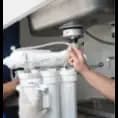
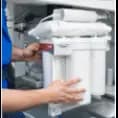

If your RO water purifier in Nashik is giving strange taste, bad smell, slow water flow, leakage, or it is not filling the storage tank, it usually means one stage inside the system is failing or getting choked. RO Service in Nashik from Water Purifier Care India (WPCI) starts with symptoms, not guesswork, because the fix depends on which part is causing the problem.
A salty or bitter taste on RO output most often points to RO membrane fatigue or a rejection problem (the membrane is not separating dissolved salts correctly). Sometimes it is also caused by exhausted post-carbon filtration, or incorrect flushing after low usage. A technician will check the TDS reading (feed vs RO output), check membrane pressure performance, and inspect the carbon filter condition before deciding whether membrane replacement is needed.
In Nashik, monsoon turbidity and hard-water scaling can push dirt through the system if pre-filters are overdue. If the water smells bad or looks slightly turbid, the first suspect is the sediment pre-filter or pre-carbon filter. If smell returns quickly after cleaning, the technician also checks for internal bio-growth in the RO line and the storage tank, and verifies whether UV (if your model has UV) is working properly.
Slow filling and weak RO output usually come from a choked sediment filter/carbon filter, low inlet water pressure, or a failing booster pump (if your setup uses one). If the machine keeps running and flow never stabilizes, the technician checks pressure settings, line choke points, and whether the solenoid valve (SV) is sticking. They also confirm whether the storage tank float valve is closing properly, because a stuck float can cause continuous running or repeated cycles.
Leakage is not a single problem. It can come from O-rings in filter housings, loose fittings on inlet/outlet lines, a crack in the storage tank, or seepage around the membrane housing. In some cases, high pressure or incorrect installation angle causes stress on tubing and connectors. WPCI technicians typically check each housing seal, trace the wet area to the exact connection point, and then replace the faulty seal/tubing rather than doing random tightening.
Strange noise often means the pump is struggling, air is trapped, or the solenoid valve is not cycling cleanly. Continuous running usually means the system is not reaching the correct shut-off condition, commonly due to a float valve issue in the tank, low pressure/flow conditions, or a control problem. During service, the technician checks pump operation, SV response, tank float movement, and sensor/line conditions so the unit stops at the right time.
If RO output tastes salty: check feed vs RO TDS, membrane performance, and post-carbon condition before deciding replacement
If water smells bad after a few days: check sediment pre-filter and pre-carbon, then inspect internal lines/tank for cleaning needs
If flow is slow: check for clogged pre-filters first, then inlet pressure and booster pump health (if fitted)
If there is leakage: trace from the wet spot to the exact housing joint, then inspect O-rings, fittings, and tank condition
If the unit runs continuously: verify tank float valve movement and solenoid cycling, then confirm pressure/flow stability
If RO output is zero or very low: check inlet supply, filter choking, membrane housing leaks, and UV/UF stages (model dependent)
Cost in RO service depends on which stage is failing (sediment/carbon filter, RO membrane, UV lamp, UF cartridge if present, pump/SMPS, solenoid valve, storage tank components, or internal tubing). It also depends on whether the issue is a simple blockage and cleaning, or a performance failure that needs replacement. Service time usually ranges based on diagnosis complexity and whether parts are available for immediate replacement. Repair is usually worth it when only one stage is failing and the rest of the system still maintains stable TDS rejection and normal flow. If multiple stages are exhausted at the same time (common after long filter neglect in hard-water areas), the technician may suggest a combined maintenance approach rather than repeated small fixes.
These are typical time windows, not guarantees. In Nashik, borewell or high-TDS municipal supply, hard water, and monsoon turbidity can reduce filter life.
Stage (RO system) | Typical interval (approx.) |
|---|---|
Sediment pre-filter | 3-6 months (faster during monsoon) |
Pre-carbon filter | 6-12 months |
Post-carbon filter | 6-12 months |
RO membrane | 2-3 years depending on input TDS and usage |
UV lamp (if your model has UV) | about 1 year of running time |
If you tell us your exact symptom (taste, smell, flow speed, leakage spot, and whether the tank fills), the service visit becomes faster and more accurate. The sensible next step is to call for RO service in Nashik and share what you are seeing right now, so WPCI can diagnose the correct stage instead of trial-and-error.
Why Trust Us?
in Nashik — Reliable, Fast & Professional
Technician visits your location for service
Guaranteed service visit in 48 hours for any request
Trained technicians for high quality service and repairs
Only high quality spare parts used for repairs
Watch
Live activity
Trusted by customers across India
FAQ
Find answers to common questions about our services
Nashik is luckier than many Indian cities when it comes to water. Most of the city's piped supply comes from dams in the Western Ghats foothills, mainly Gangapur dam on the Godavari, with Mukane and Darna dams also contributing their share under the Nashik Municipal Corporation's annual allocation. Dam water from basalt hills is generally soft and low in dissolved solids. That makes Nashik one of the few places where an honest technician will sometimes say: you may not need RO at all.
But the picture is not uniform. Colonies on the city's edges, many row houses and older bungalows also run borewells, and in a dry year tankers become common in places such as Pathardi, Mhasrul and Adgaon. Groundwater in Nashik district is moderately hard in many areas, and studies have recorded nitrate in farm-heavy pockets. Your purifier needs to match your actual source.
On every visit we measure TDS at your tap. If the reading is low and your only source is dam water, we say so, even if it means recommending a simpler purifier.
Every July and August, heavy rain falls on the Trimbakeshwar and Igatpuri catchments. Rivers run brown, and some of that silt reaches the treatment plants and, in smaller amounts, your tap. This is the single biggest seasonal challenge for purifiers in Nashik. Sediment filters that last six months the rest of the year can choke in a few weeks, membranes lose flow, and UV sleeves get coated. If your purifier slows down in the monsoon, it is almost always the pre-filter. A sediment change in early August, and a full service once the rains ease in September or October, keeps things moving.
| Problem | Common Reason in Nashik |
|---|---|
| Slow filling in July and August | Pre-filter clogged with monsoon silt |
| Water tastes flat or "empty" | TDS controller closed tight on low-TDS dam water |
| Heavy taste in summer | Switch to borewell or tanker water, controller not adjusted |
| Cloudy water from purifier | UV sleeve coated, UF membrane fouled |
| Smell in stored water | Tank not cleaned, carbon exhausted |
| Purifier dead after thunderstorm | SMPS damaged by power surge |
In years when the monsoon is weak, Gangapur's stock falls through summer, and the civic body has introduced weekly water cuts and even considered drawing on dead storage. Water from the bottom of a reservoir often carries more silt and a stronger odour, and many families top up with tanker water that may have a very different TDS. If your area is under cuts, check your purifier's taste and flow every few days. A quick re-setting of the TDS controller, and a fresh carbon filter, often fix what people assume is a broken purifier.
On dam supply, a service every six months is usually enough, timed so one visit follows the monsoon. On borewell or tanker water, every three to four months is safer. Summers here are hot, often near 40°C in April and May, so a quick check before the heat is also helpful. If your purifier sits idle while the family travels, run the first tankful to waste when you return.
We install purifiers of all brands, set them up for your water, and fit an external pre-filter where silt is a concern. When you shift homes, say from a flat in Cidco to a new society on Gangapur Road, we uninstall and reinstall properly. Annual maintenance contracts are available for homes, clinics, offices and small factories in Satpur and Ambad.
College Road, Gangapur Road, Canada Corner, Sharanpur Road, Panchavati, Nashik Road, Jail Road, Upnagar, Cidco, Indira Nagar, Pathardi Phata, Dwarka, Satpur, Ambad, Mhasrul, Adgaon, Makhmalabad Road, Tidke Colony, Govind Nagar, Deolali Camp and nearby areas.
Water Purifier Care India is an independent multi-brand service provider and is not affiliated with any purifier manufacturer.
Call 8506096743 or book through this page for RO service in Nashik.