



Repair
★ 4.5(5k+ Bookings)
- Complete RO system inspection and diagnosis
- Repair of pump, SMPS, membrane and filters
₹399₹450Save 11%
Doorstep RO Repair, Installation & AMC in Tiruchirappalli

RO Service Center always stands whenever you call us for service in Tiruchirappalli. You must schedule a RO service to experience our satisfactory and low-cost service in Tiruchirappalli. RO service Centre always care for your schedule with the vast service team.
Packages

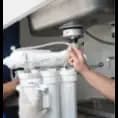
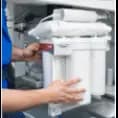

If your RO water purifier in Tiruchirappalli is not giving the same clean taste as before, you usually notice it first in everyday ways: slow output, bad taste or smell, strange noise, leakage, or the unit filling again and again. When this happens, Water Purifier Care India (WPCI) follows a diagnosis-first order during RO service: symptoms first, then the exact stage that is failing.
Bad taste (metallic/salty) even after running the tap: often RO membrane is exhausted, or pre-carbon/post-carbon filters are heavily loaded.
Bad smell (musty/chemical) or cloudy purified water: usually carbon filter or storage-tank hygiene issue; sometimes UV/UF related parts depending on model.
Slow water flow / low TDS drop: commonly sediment pre-filter is choked with turbidity (common during monsoon), or RO membrane is scaling.
Strange noise while filtering or frequent on-off cycling: check booster pump, solenoid valve (SV), air in lines, and inlet pressure stability.
No water coming out / storage tank not filling: float valve problem, blocked inlet, low inlet pressure, or SV not switching.
Water leakage around the housing or fittings: O-rings worn, housing crack, loose tubing, or overflow from tank/float valve.
A good RO service call is not random part replacement. The technician starts with quick checks that narrow the fault to one stage: inlet quality and pressure, then pre-treatment filters, then RO membrane performance, then storage and dispensing parts. This saves time and avoids unnecessary replacements.
Inlet water check: measure inlet pressure and confirm whether supply is stable (borewell and overhead-tank setups often fluctuate).
Turbidity and sediment load check: inspect sediment/pre-filter condition, especially if your area faces monsoon dust.
Filter bypass check: confirm whether pre-carbon and post-carbon filters are allowing proper contact time; inspect housings for clogging.
RO performance check: test TDS at inlet vs purified output to judge membrane rejection; check for membrane scaling signs.
Electrical and control check: inspect power supply/SMPS, UV lamp (if present), UF cartridge (if present), and solenoid valve (SV) switching.
Leak and tank check: verify storage tank level control, float valve operation, and O-ring seals at housings and quick connectors.
For repair in Tiruchirappalli, WPCI service technicians usually restore correct function by fixing the exact failing stage. That can mean cleaning or replacing a choked sediment/pre-filter, swapping carbon filters if taste/smell issues persist, replacing a scaled RO membrane, or correcting control parts like SV or float valve. If there is leakage, they check O-rings and housing connections first, because a small seal failure can look like a major RO fault.
Routine service focuses on preventing the same complaint from coming back quickly. This includes internal cleaning of the RO unit, checking filter conditions, checking UV lamp/UF cartridge status (model dependent), and verifying that the RO membrane is still producing the expected TDS reduction.
During installation or relocation, technicians set the correct flow path: inlet to pre-filters, RO membrane output to storage, and reject line to drain. They also ensure the unit is placed to avoid tank overfilling and that drain connections are not kinked. A wrong drain height or blocked drain line can cause low flow, cycling, or stress on the pump.
RO stage | Typical interval (not a guarantee) | What it usually fixes |
|---|---|---|
Sediment pre-filter | Every 3-6 months | Slow flow due to turbidity/silt, especially during monsoon |
Pre-carbon and post-carbon filters | Every 6-12 months | Smell/taste issues, chlorine-related taste problems |
RO membrane | Around 2-3 years | High TDS, salty/metallic taste, low rejection |
UV lamp (if your model has UV) | About 1 year of running time | When microbial concern is suspected (model dependent) |
UF cartridge (if your model has UF) | Depends on model and inlet quality | When the unit uses UF for additional filtration |
Cost factors: whether the issue is only clogged filters vs RO membrane replacement, whether control parts like SV/float valve/booster pump need fixing, whether there is leakage requiring O-rings/tubing/housing seals, and whether electrical components (SMPS/UV) test faulty.
How long it takes: simple filter change or O-ring seal work is faster; membrane replacement and thorough internal cleaning take longer; installation/un-installation depends on plumbing access and drain setup.
Is it worth repairing: if the RO membrane is failing (high TDS or salty taste) but the housings, pump, SV, and tank controls are healthy, repair is usually sensible. If multiple stages are failing together (pump + membrane + control + repeated leak), the technician may suggest a clearer maintenance plan based on your usage and water quality.
When you should not delay: if there is leakage, repeated cycling, or purified water taste becomes consistently bad, service should be done soon to avoid damage to electrical parts and storage hygiene issues.
What you can check before calling: confirm whether the issue is only at the dispensing tap or also affects tank filling, note if the inlet supply is stable, and check if the reject drain line is flowing normally (no complete blockage).
Is the purified water output slow, or is there no output at all?
Does the purified water taste salty/metallic, or does it smell musty/bad?
Do you hear the pump running continuously, or does it stop and start often?
Any water leakage near filter housings, tank area, or tubing joints?
Did the problem start after monsoon turbidity, a local water supply change, or after the unit was shifted?
Have you checked the inlet pressure stability (especially with overhead tanks or borewell pumps)?
If you tell WPCI the exact symptom (taste, flow, noise, leakage, or no-water) and when it started, the technician can come prepared and do the right checks in order. The sensible next step is to book an RO service visit so the fault is identified at the stage that is actually failing, not guessed and replaced blindly.
Why Trust Us?
in Tiruchirappalli — Reliable, Fast & Professional
Technician visits your location for service
Guaranteed service visit in 48 hours for any request
Trained technicians for high quality service and repairs
Only high quality spare parts used for repairs
Watch
FAQ
Find answers to common questions about our services
Tiruchirappalli has drunk from the Cauvery for well over a century. The city's protected water supply began in 1895 at Kambarasampettai, a few kilometres upstream on the river bank, and the Corporation still draws most of its supply from wells and collector systems along the Cauvery and the Kollidam. Because the river bed itself filters the water before it reaches those wells, Trichy's piped supply is usually clearer and lower in dissolved salts than borewell water in the same city.
That does not mean every home gets the same water. Supply timings vary by ward, many houses top up with private borewells, and when the Cauvery runs low in the hot months, people lean more on groundwater and tankers. All of this decides what kind of purifier you need and how often it should be looked after. Here is what our RO service in Tiruchirappalli covers and why.
The Cauvery's flow at Trichy depends heavily on releases from the Mettur dam upstream and on the monsoons. In the months before water is released, usually through the peak of summer, river-bed wells yield less and groundwater tables fall. The Corporation has drilled additional deep borewells on the Cauvery bed during such lean spells. At household level, families who normally drink Corporation water often switch to borewell or tanker water for weeks at a time.
Borewell water in and around Trichy is commonly hard and higher in TDS than river water. When your purifier's input suddenly changes from one to the other, its filters and membrane take a heavier load, and the taste of the output can change too. A pre-summer service catches problems before the switch.
If your home relies only on the Corporation's Cauvery supply and the tap TDS is low, a UV or UV+UF purifier may be enough to deal with germs, and it wastes no water. If you use borewell water for even part of the year, or your tap reading is high, an RO-based purifier is the right choice, because only reverse osmosis reduces dissolved salts and hardness. Many Trichy families have RO+UV systems precisely because their source changes with the season.
On RO units, the TDS controller (sometimes called a mineral or taste valve) should be set according to your source. Cauvery water can tolerate some blending; hard borewell water usually cannot. We measure and set it on every visit.
| Fault | Typical Reason in Trichy |
|---|---|
| Taste turns salty in summer | Switch to hard borewell water on a scaled membrane |
| Muddy sediment filter | Tanker water or turbid supply after heavy rain |
| Purifier runs continuously | Weak inlet pressure or faulty float valve |
| Musty smell from output | Old carbon filter, stale tank in hot weather |
| Dead purifier after a storm | Adaptor or board damaged by a power surge |
| White scale on tap | Hardness from borewell water passing through |
Trichy is one of the hotter cities in Tamil Nadu, with April and May temperatures regularly near or above 40°C. Warm kitchens and warm storage tanks are good conditions for bacterial growth. Clean your overhead sump or tank at least twice a year, keep the purifier out of direct sun, and do not let purified water sit in the tank for days if the house is locked for a trip.
For homes using mainly Corporation water, a service every six months is usually enough. For homes on borewell water, or those that switch to it in summer, every three to four months is safer. A check in March, before the hottest months, and another after the northeast monsoon in December, suit the local calendar well.
We install purifiers of all common brands, move them when you shift house, and take them down safely during kitchen work. Annual maintenance contracts are available for homes, offices, lodges, hostels and clinics.
Trichy has a large student population, with engineering and arts colleges spread from Thuvakudi to the city centre, and many paying-guest homes and hostels serve dozens of residents from one or two purifiers. Those machines handle several times the volume of a family unit, so filters clog faster and tanks need more frequent cleaning. For such buildings we suggest a visit every two to three months under a contract.
Thillai Nagar, Srirangam, Cantonment, K.K. Nagar, Woraiyur, Puthur, Thennur, Anna Nagar, Ariyamangalam, Golden Rock, Thiruverumbur, Tiruvanaikoil, Palakkarai, Karumandapam, Crawford, Mannarpuram, Sangiliyandapuram, Kajamalai, Edamalaipatti Pudur and nearby areas.
Water Purifier Care India is an independent multi-brand service provider, not attached to any purifier company.
Call 8506096743 or book through this page for RO service in Tiruchirappalli.