



Repair
★ 4.5(5k+ Bookings)
- Complete RO system inspection and diagnosis
- Repair of pump, SMPS, membrane and filters
₹399₹450Save 11%
Doorstep RO Repair, Installation & AMC in Bhiwandi
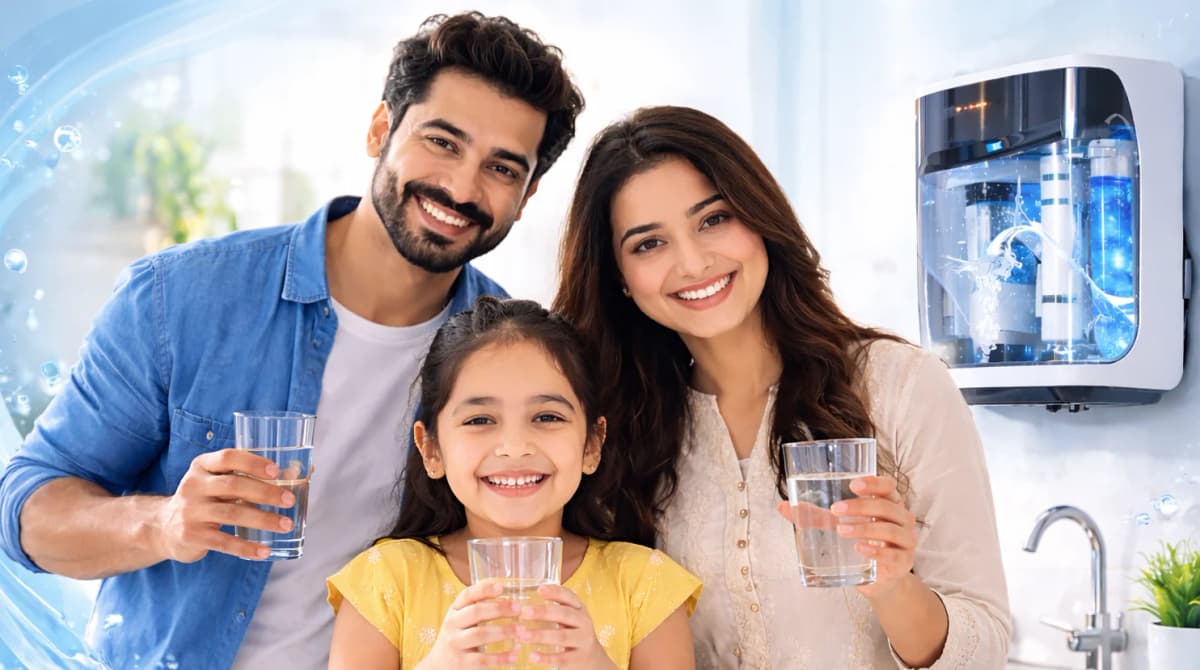
RO Service Center always stands whenever you call us for service in Bhiwandi. You must schedule a RO service to experience our satisfactory and low-cost service in Bhiwandi. RO service Centre always care for your schedule with the vast service team.
Packages


If your RO water purifier in Bhiwandi is giving poor taste, bad smell, salty water, slow output, or it is leaking, you do not need guesswork. A proper RO service in Bhiwandi starts with symptoms, because each symptom usually points to a specific part of the system. When Water Purifier Care India (WPCI) attends a call, the technician checks the most likely causes first, then moves to the deeper parts like the RO membrane and control valves.
Salty or bitter taste, and TDS stays high: most often the RO membrane is exhausted, or the brine (reject) flow is not happening correctly.
No water or very low flow: commonly a clogged sediment pre-filter, failed solenoid valve (SV), low inlet pressure, or a weak booster pump.
Water smells bad or tastes dull/earthy: usually the carbon pre-filter or post-carbon filter is saturated, or there is growth due to long idle time.
Water keeps dripping/leaking from the housing: typically a loose housing O-ring, a cracked fitting, or seepage after a filter change.
Output is slow only after the unit runs for some time: often scaling inside the membrane housing or partial choking in pre-filters.
Strange noise (humming/clicking) with poor output: could be pump running against pressure, a stuck valve, or an electrical/control issue.
Check the water source: municipal vs borewell, and whether the input is turbid (common during monsoon).
Measure inlet pressure and flow using a pressure gauge and observing the refill speed of the storage tank (if present).
Inspect pre-filters and carbon cartridges: look for heavy clogging, channeling, and confirm correct seating of housings.
Check the RO membrane performance: test reject/filtered ratio and run an outlet TDS check using a TDS meter.
Inspect control parts: solenoid valve (SV), pressure switch/flow switch, and any booster pump operation if installed.
Verify storage and plumbing: ensure no backflow, confirm tank float valve function, and check for leakage points at fittings/O-rings.
In most Bhiwandi homes, the input water has hardness and fluctuating quality. That quickly burdens the sediment pre-filter (it protects the RO membrane from sand/silt). After that, the pre-carbon and post-carbon filters mainly control taste, smell, and chlorine effects. If taste becomes salty and TDS does not drop, the RO membrane is the usual suspect. If your unit has UV (or UF cartridge), the technician also checks whether UV lamp hours and power are correct, because UV helps with microbial safety but it cannot reduce dissolved salts like RO does. For tanks, a stuck float valve can cause continuous running or repeated cycling, and a failed solenoid can disturb proper reject flow.
Stage / Part | Typical interval in many Indian homes |
|---|---|
Sediment pre-filter | Every 3-6 months (faster if monsoon turbidity is high) |
Carbon filters (pre or post) | Every 6-12 months |
RO membrane | Often 2-3 years (shorter with very high inlet TDS and heavy scaling) |
UV lamp (if UV model) | About 9-12 months of running time |
UF cartridge (if UF model) | Roughly every 6-12 months depending on fouling |
Cost is mainly decided by which stage is failing (pre-filters vs membrane vs pump/SMPS vs valves), how many parts need replacement, and whether the issue is one-time (like a clogged filter) or deeper (like membrane scaling or valve malfunction). If only cartridges are choked, the service is usually quicker. If the technician needs to test membrane performance, adjust plumbing, and replace control parts like the solenoid valve or booster pump components, it takes longer. Repair is usually worth it when the rest of the system is working and only one stage has failed. If the membrane is exhausted and multiple stages show severe clogging together, replacement and full service become the sensible option.
Check if the issue started after a heavy rain/municipal supply change. Sudden turbidity often chokes sediment filters.
See whether the storage tank is filling normally. If tank does not fill, suspect low inlet pressure, pump, SV, or float valve.
Observe for visible leaks around filter housings, fittings, and drain line. If water is pooling, stop using until inspected.
Note the exact symptom: salty taste vs slow flow vs no water. This helps the technician start at the right stage.
Do not open electrical parts, replace SMPS, or bypass safety controls. If you see leakage from inside the RO housing, or if the unit is repeatedly running without producing water, the fault can be in valves, pressure switches, or membrane reject flow. In these situations, calling WPCI ensures the technician checks pressure, valves, reject ratio, and tank cycling correctly instead of trial-and-error.
If you tell us your symptom and whether you have borewell or municipal water, the technician can come prepared for the right diagnosis. The sensible next step is to book an RO service visit in Bhiwandi and avoid running the unit until the cause is checked, especially if taste/TDS is high or leakage is happening.
Why Trust Us?
in Bhiwandi — Reliable, Fast & Professional
Technician visits your location for service
Guaranteed service visit in 48 hours for any request
Trained technicians for high quality service and repairs
Only high quality spare parts used for repairs
Watch
FAQ
Find answers to common questions about our services
Ask any family in Bhiwandi about their water and you will rarely get a one-word answer. Some days it is municipal supply, some days the tap stays dry and a tanker fills the sump, and in a few chawls and compounds an old well or borewell fills the gap. This patchwork is the single biggest reason purifiers in Bhiwandi wear out unevenly, and it is why our RO service in Bhiwandi always begins with a few questions about where your water came from this month.
The Bhiwandi-Nizampur City Municipal Corporation (BNCMC) does not have one large dam of its own. Most of its supply is bought from the Shahad-Temghar (STEM) water authority, which draws from the Ulhas river system, with a further share supplied by Mumbai's municipal corporation from the pipelines that pass close to the city. A small amount historically came from the local Varala Devi lake. According to recent civic figures reported in the press, supply has run well short of the city's demand, which explains frequent water cuts, weekly shutdowns for repairs and a heavy reliance on tankers in summer.
In early 2026, drinking water supply from Varala lake was halted after tests reported faecal contamination, and areas such as Kamatghar and Fena Gaon had to rely on tankers. It is a reminder that in Bhiwandi the source can change suddenly, and a purifier needs to be ready for it.
An RO with UV is a sensible choice for most Bhiwandi homes precisely because the input keeps changing. But the TDS controller should be set for the harder source you use, not the softer one.
| What You Notice | What Is Usually Behind It |
|---|---|
| Water stops coming after a tanker fill | Sand from tanker water choking the pre-filter |
| Purified water tastes salty | Membrane wearing out on hard tanker or borewell water |
| Bad smell from the tank | Stored water sitting through long supply cuts |
| Pump runs but tank never fills | Very low inlet pressure, common during cut days |
| Purifier dead after a power trip | Adaptor or board damaged by voltage fluctuation |
| Leaking from the bottom | Loose fittings or cracked filter housing |
BNCMC regularly announces 24-hour shutdowns for maintenance of its main lines, and in summer the city has faced percentage cuts in supply. When the tap runs dry, an RO pump keeps trying to draw water and can run dry, which shortens its life. Air also enters the lines, and when supply returns the first rush is often muddy. Two simple habits help: switch the purifier off on announced shutdown days, and let the tap run for a minute before switching it back on once supply resumes.
A UV or UF-only purifier works well on consistent, low-TDS piped water, but very few Bhiwandi homes can count on that all year. If your household never uses tankers or borewell water, UV+UF may be enough. Otherwise, an RO+UV system with a properly set TDS controller gives the safest margin. We will not push a new purifier; we will simply tell you whether your current one suits your sources.
On mostly municipal supply, every six months is reasonable. If you depend on tankers for part of the year, plan for a service every three to four months, and get the sediment filter checked after the summer tanker season. Shops, small offices and powerloom units with staff purifiers should consider a maintenance contract with visits every two to three months.
We install purifiers of all brands, shift them when you move between rooms or buildings, and provide annual maintenance contracts that include scheduled visits, tank cleaning and filter changes as required.
Kalyan Road, Anjur Phata, Dhamankar Naka, Kamatghar, Fena Gaon, Shanti Nagar, Nizampura, Padma Nagar, Teen Batti, Kaneri, Narpoli, Gaibi Nagar, Mankoli, Vanjarpatti Naka, Temghar, Kongaon, Rahnal, Kalher, Purna and nearby areas.
Water Purifier Care India is an independent multi-brand service provider.
Call 8506096743 or book through this page for RO service in Bhiwandi.