


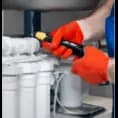
Repair
★ 4.5(5k+ Bookings)
- Complete RO system inspection and diagnosis
- Repair of pump, SMPS, membrane and filters
₹399₹450Save 11%
Doorstep RO Repair, Installation & AMC in Nashik

Eureka Forbes RO Service Nashik always stands whenever you call us for service. You must schedule a Eureka Forbes RO service to experience our satisfactory and low-cost service in Nashik. Eureka Forbes RO Service Nashik always care for your schedule with the vast service team.
Packages

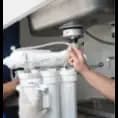
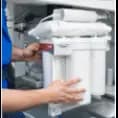
If your Eureka Forbes RO is giving trouble in Nashik, it is usually not random. Most calls we get start with a clear symptom like salty taste, bad smell, slow RO water flow, frequent auto-stop, or leakage under the cabinet. In this Nashik Eureka Forbes RO service page, we are going to walk you through what the symptom typically means, what a technician checks first, and what you can confirm before the visit so the diagnosis is fast.
Salty or metallic taste: often points to RO membrane exhaustion, a weak permeate flow, or improper recovery due to low inlet pressure. Technician checks TDS readings before/after RO, membrane performance, and whether the bypass/solenoid path is working correctly.
Bad smell or discolored water: commonly from carbon filter saturation or bacterial growth in storage/line when service is delayed. Technician checks carbon filter condition, flushes system, inspects storage tank and tubing, and confirms whether UV (if present) is functioning.
Slow filling or low output: usually clogged sediment pre-filter or fouled membrane from hard water scaling (common in Nashik borewell and high-TDS municipal pockets). Technician checks inlet pressure, flushes pre-filter, measures pressure drop, and inspects for scaling.
Continuous running or frequent stops: often related to float valve issues, storage tank level control, or solenoid valve (SV) sticking. Technician checks float/level mechanism, SV operation, and whether the unit is reaching shutoff conditions.
Water leakage under the RO: can be from housing O-rings, loose fittings, cracked drain line, or leakage at fittings near the membrane housing. Technician does a step-by-step leak isolation (inlet, RO housing, drain, tank connection) before replacing parts.
No water / no RO output: points to low inlet pressure, power/SMPS issue, pump failure, or UV lamp failure (if model uses UV). Technician checks power supply, booster pump (if installed), inlet flow, and safety controls.
Check inlet water condition and flow: verify whether you are on municipal supply or borewell, and note recent changes like monsoon turbidity or tanker water.
Measure performance basics: TDS reading at inlet and RO output (and sometimes in storage) to confirm whether the problem is membrane, bypass path, or carbon stage.
Inspect and test key parts: pre-filters, carbon filters, RO membrane condition, UV/UF cartridge status (as per your model), and check solenoid valve (SV) and float/level control.
Flush and clean: backflush/flush the RO line and clean the housing paths to remove loose sediment and reduce scaling impact.
Replace what is actually needed: change only the failed stages (for example sediment pre-filter, pre-carbon, post-carbon, RO membrane, UV lamp) rather than doing random swaps.
Check if the storage tank level is normal and the float arm is not stuck (only if your unit design allows easy visibility).
Notice when the problem started: after monsoon, after a long gap, after tank refilling, or after a power fluctuation.
Look for obvious wet spots: under the RO, around the membrane housing, near drain line joints, and around the faucet fitting.
If you have a TDS meter, note inlet TDS and RO output TDS. Even one reading helps us confirm membrane vs carbon stage issues.
Listen for sound changes: booster pump running loudly/continuously or unusual clicking can hint at pressure or solenoid problems.
Nashik water can be hard and high-TDS in many areas, and monsoon turbidity can clog sediment filters faster. Typical intervals below help you understand what is aging, but exact timing depends on your inlet TDS, usage hours, and whether the unit is flushed regularly.
Stage (common Eureka Forbes RO stages) | Typical interval in Indian conditions |
|---|---|
Sediment pre-filter | 3-6 months |
Pre-carbon / carbon filter (taste & smell control) | 6-12 months |
RO membrane | 2-3 years (often earlier with very hard/high-TDS input or no pre-filter changes) |
UV lamp (if your model has UV) | around 12 months of running time |
UF cartridge (if present in your setup) | about 12-24 months depending on fouling |
Cost depends on what is actually failed, not just the model. For example, a clogged sediment filter is simple, while a RO membrane replacement needs performance confirmation and proper flushing to avoid early repeat issues. Time depends on diagnosis first, then parts replacement, and finally leak checks and post-replacement flushing. In most cases, repair is worth it when the issue is limited to filters, UV/UF, or a valve/fitting problem; replacement is more likely when TDS rejection is consistently poor or the membrane shows heavy fouling and the system keeps underperforming.
If you share the symptom you are facing (taste, smell, flow, leakage, or no RO output) and roughly when it started, Water Purifier Care India (WPCI) can plan the right checks and parts for your Eureka Forbes RO service in Nashik. The sensible next step is to call with your symptom and whether you have inlet TDS/output TDS readings, so the technician can diagnose faster on the first visit.
Why Trust Us?
in Nashik — Reliable, Fast & Professional
Technician visits your location for service
Guaranteed service visit in 48 hours for any request
Trained technicians for high quality service and repairs
Only high quality spare parts used for repairs
Watch
FAQ
Find answers to common questions about our services
Nashik is a city of pilgrims as much as residents. Ramkund and the ghats of Panchavati draw visitors all year, Trimbakeshwar is a short drive away, and the Simhastha Kumbh Mela due in 2027 is expected to bring enormous crowds. Ashrams, dharamshalas, lodges and family-run guesthouses across Panchavati, Tapovan and Old Nashik serve drinking water to large numbers of people, and many of them rely on Eureka Forbes purifiers, from old UV units to the latest Aquaguard and AquaSure models.
Homes in the city use the same range. This page explains how we service the whole Eureka Forbes family on Nashik water, for households and for places that serve many.
The Nashik Municipal Corporation supplies water from Gangapur, Mukane and Darna dams. This soft, low-TDS surface water is one reason older UV-only Eureka Forbes units have survived so well in Nashik: on clean dam water, UV disinfection alone can be adequate. RO adds value where borewells are used, since groundwater here is often moderately hard and can carry nitrate in some areas, and during dry summers when tanker water enters the picture.
So, unlike in cities with salty groundwater, we do not automatically advise Nashik families to replace a working UV purifier. We test first. If your home is on dam supply and the readings are good, a well-serviced UV Aquaguard may serve you for years more.
| Feature | Legacy Eureka Forbes | Current Aquaguard and AquaSure |
|---|---|---|
| Main purification | UV, some early RO | RO + UV + UF with copper or mineral stages |
| On Nashik dam water | Often adequate if well maintained | Excellent, but taste adjuster must be set right |
| On borewell or tanker water | UV-only is not enough | Suitable |
| Common faults | UV choke, sleeve film, perished seals | Sensors, SMPS, display boards |
| Parts | Some discontinued; compatibles used | Readily available |
A domestic purifier in an ashram kitchen or a lodge near Ramkund may serve dozens of people a day, and far more during festival seasons. At that load, cartridges and UV lamps run out in a fraction of their normal time, and storage tanks are refilled so often they are rarely cleaned. For such places, we recommend monthly or bi-monthly checks, an external pre-filter for monsoon silt, and a written log of each service. Ahead of the 2027 Simhastha, institutions expecting heavy footfall should plan a full check of every purifier well in advance, and consider whether a higher-capacity commercial unit makes more sense than several overworked household ones.
Heavy rain in the Trimbakeshwar and Igatpuri catchments adds turbidity to the city's supply in July and August. For UV purifiers, this matters more than people realise. UV light needs clear water and a clean quartz sleeve to work. Cloudy water and a filmed sleeve shield germs from the light. If your legacy Aquaguard is UV-only, a sediment change and sleeve clean right after the heaviest rains is the most important service of the year.
Newer Aquaguard RO models handle the rainy season better because the membrane and UF stage remove the fine particles before the water reaches the UV chamber. Even so, their pre-filters take the brunt of the silt. Families who notice a slower fill rate in August should not assume the RO membrane has failed. A quick sediment change usually restores normal flow, and the membrane, which on Nashik's soft water tends to last well, can stay in place.
Homes on dam supply: twice a year, with one visit after the monsoon. Homes on borewell or tanker water: every three to four months. Ashrams, lodges and guesthouses: monthly to bi-monthly depending on use. AquaSure gravity cartridges: as soon as rated capacity is reached.
Panchavati, Ramkund area, Tapovan, Hirawadi, Old Nashik, Bhadrakali, Ganeshwadi, Dindori Road, Peth Road, Mhasrul, Ashok Stambh, College Road, Gangapur Road, Canada Corner, Indira Nagar, Cidco, Nashik Road, Jail Road, Deolali Camp and nearby areas.
Important: Water Purifier Care India is an independent multi-brand service provider, not Eureka Forbes Ltd and not its authorised service centre. Eureka Forbes, Aquaguard and AquaSure are named only to describe the products we service. If your purifier is under manufacturer warranty, consider contacting Eureka Forbes directly.
Call 8506096743 or book through this page to arrange service for any Eureka Forbes purifier in Nashik.